 Male Pattern
Baldness Male Pattern
Baldness
What is male pattern baldness?
Male pattern baldness is a very
common type of hair loss that affects millions of men in the UK and across the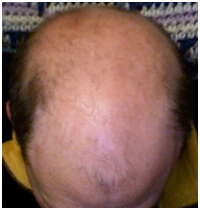 world. It
is less common for women to experience this type of hair loss but it is possible and is generally known as
female pattern baldness. world. It
is less common for women to experience this type of hair loss but it is possible and is generally known as
female pattern baldness.
Male pattern baldness is not a
disease but a genetic condition that can begin anytime from the late teens onward. By the age of sixty most men
will experience some degree of hair loss. The age at which male pattern baldness begins, and the extent of the
hair loss is also to some extent hereditary.
If you are experiencing male pattern
baldness, you will initially notice some thinning of the hair in certain areas of the head, followed by more
extensive hair loss which leaves parts of the scalp visible and exposed.
What causes male pattern
baldness?
The particular type of hair loss
known as male pattern baldness is caused by oversensitive hair follicles, a 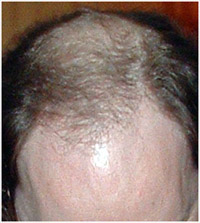 condition you may
have inherited from either parent. The hair follicles react to a substance called dihydrotestosterone, or
DHT, produced by the male hormone testosterone. condition you may
have inherited from either parent. The hair follicles react to a substance called dihydrotestosterone, or
DHT, produced by the male hormone testosterone.
Exposure to DHT can cause
oversensitive hair follicles to reduce in size making it easier for the hair to fall out and leading to
thinning hair. Eventually DHT causes the hair follicles to stop working altogether, resulting in hair
loss.
Men or women that experience male
pattern baldness do not have any more testosterone in their bodies than people with a full head of hair, it’s
just that their hair follicles are particularly sensitive to the testosterone or the DHT that they do
have.
Why is it called male
pattern baldness?
Male pattern baldness is so named
because the hair loss associated with this condition tends to occur in a set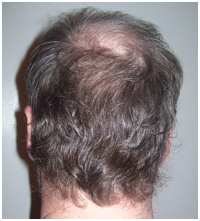 pattern on the head. There are two
areas where hair loss usually begins: pattern on the head. There are two
areas where hair loss usually begins:
-
The hairline begins to recede towards the top of
the head
-
The hair around the crown and temples begins to thin
out
In highly progressed cases of male
pattern baldness, the receding hairline and the thinning patches on the crown and temples meet up leaving a
large bald section on top of the head and a semicircle of hair around the back. It is rare for people with male
pattern baldness to lose all of their hair, and the hair around the back of the head usually continues to grow
well, but in severe cases all of the hair might eventually be lost.
Can I prevent the onset of
male pattern baldness?
Hair loss can be distressing and can
lead to reduced self-esteem or in severe cases depression, so people are continually looking for ways to
prevent it. Unfortunately, if you have inherited the genes responsible for male pattern baldness, there is no
magic remedy and you can’t altogether prevent hair loss. However, there are treatments available to slow down
the progress of male pattern baldness, and if your hair loss is already extensive there are various hair
replacement techniques you can try.
At Senator Hair Clinic in
Birmingham, we offer:
-
medication based
hair loss treatments to prevent further hair loss and stimulate
regrowth
|
|
|
|
|
|
Call 0121-356-2777 for a free and confidential hair replacement
consultation with no obligation
9am to 5pm |
|
|
|
|
|
|
-
we also provide the
latest hair transplant techniques to take some of the remaining hairs from the back of the head and
implant them in the parts of the scalp where the hair is
thinning
-
finally we offer
high quality cosmetic hair loss treatments to give the effect of a natural looking head of hair
without surgery
* images sourced by
Wikipedia
© Copyright - 2009 - 2011 www.hairreplacementuk.net - male pattern
baldness
|